

FLIGHT REVIEW AND INSTRUMENT PROFICIENCY CHECK
CONTINUTE YOUR FLIGHT TRAINING WITH A FLIGHT REVIEW
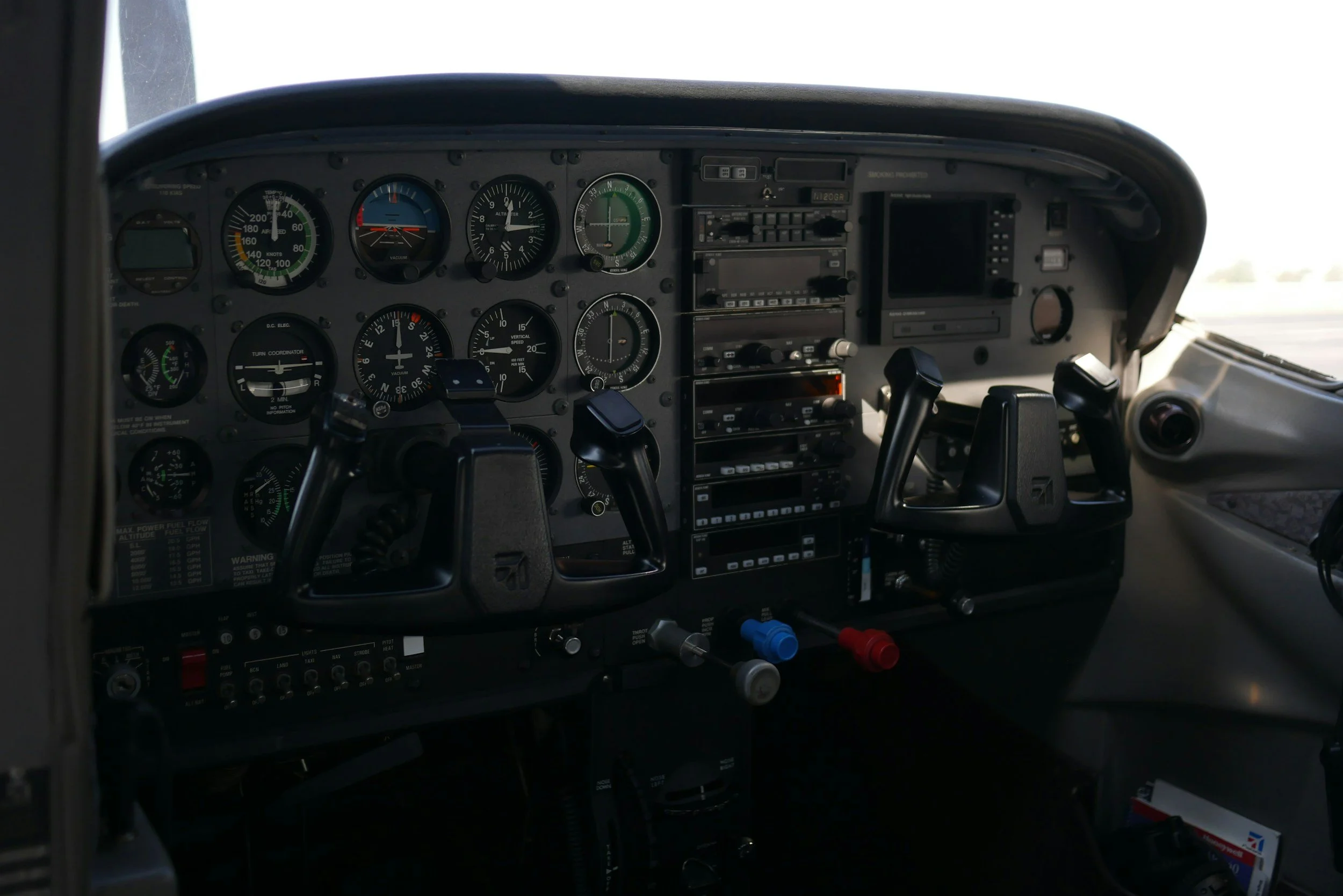
A flight review is a periodic evaluation of a pilot's skills and aeronautical knowledge. While you’re pilot certificate does not expire, within the proceeding 24 calendar months you must meet certain requirements to be able to fly as Pilot-in-Command (PIC).
The most common method to meet this requirement is to complete a flight review with an instructor. This is a training and evaluation event, not a pass/fail test.
Requirements and Structure
The flight review, specified under Title 14 of the Code of Federal Regulations (14 CFR) § 61.56, must include:
Minimum of 1 hour of flight training
Minimum of 1 hour of ground training
We prefer to tailor this training to your needs and flying goals. It must also cover:
A review of the current general operating and flight rules of 14 CFR Part 91.
A review of maneuvers and procedures necessary for the pilot to safely exercise the privileges of their pilot certificate.
The review must be conducted in an aircraft for which the pilot is rated, meaning we cannot do the training in a multi-engine airplane if your pilot certificate is only for Airplane Single-engine Land.
Preparation
Think of a flight review like a checkup. It’s not meant to be a pass/fail, but an overall review to make sure you’re keeping up with rule changes and pilot skills while making safe decisions in our demanding and often busy world of aviation. If there are areas that need improvement, your instructor will schedule another lesson, or more if needed, to make sure you’re out there operating safely
Ground portion: Completing AeroDynamic’s open-book quiz prior to your ground lesson will allow us to meet the Part 91 requirements of your flight review so we can focus on tailoring the training to your individual needs.
Flight portion: Pilots can prepare by reviewing the FAA’s Guidance (found here in AC 61-98E) and discussing a plan of action with their CFI.
Instrument Proficiency Check
⁎
Instrument Proficiency Check ⁎
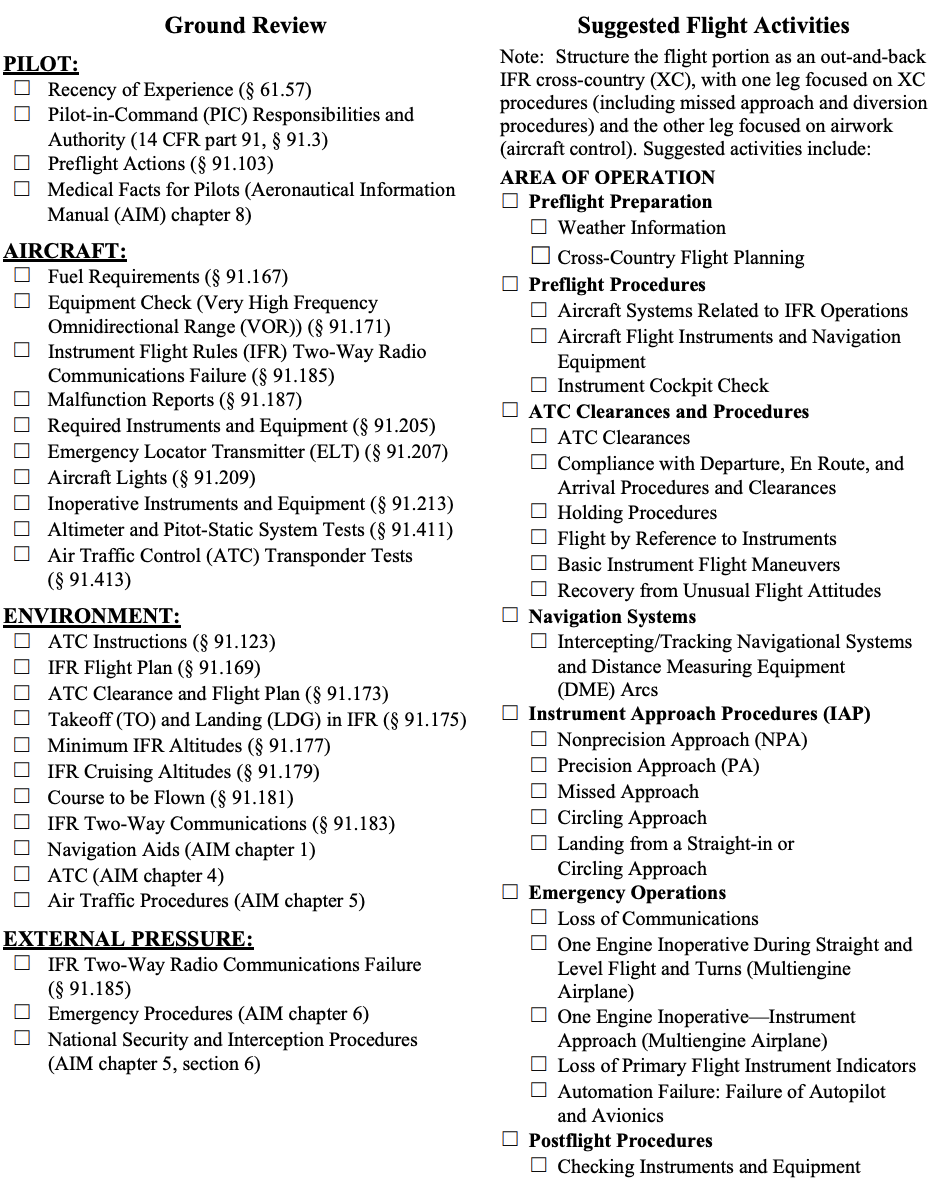
When it's required:
An Instrument Proficiency Check (IPC) becomes mandatory if an instrument-rated pilot has not met the required instrument experience within the past 12 months. FAR 61.57(e) details instrument currency requirements and when an IPC is required.
What's assessed
Ground portion: Appendix 1, page 29, in the Instrument Airplane ACS describes exactly which tasks must be covered for the IPC.
Flight portion: This includes the mandatory tasks outlined in the ACS such as instrument approaches, holding procedures, and simulated emergencies while navigating solely by the use of instruments.
AC 61-98E is a great resource to use to prepare for an IPC.
The variety of microclimates in the San Francisco Bay area often gives us opportunities to fly in fog and make instrument approaches to low minimums even in the height of summer.